Electrical equipment after a storm does not fall into one simple category where everything is either reusable or ruined. Coastal Comfort Electric’s storm damage electrical repair service helps Wilmington-area homeowners identify affected equipment and build a property-specific repair, replacement, testing, and coordination plan.
A closed panel can look normal while nearby conduit has shifted. An exterior receptacle can appear dry after wind-driven rain reached it. A surge may affect connected equipment without leaving obvious marks. The decision starts with what happened, what equipment was exposed, and what qualified inspection reveals.
The Four Questions Behind Repair Or Replacement
1. What kind of exposure occurred?
Flooding, storm surge, roof leaks, wind-driven rain, impact, lightning or surge effects, and prolonged humidity can affect equipment differently. Water depth, contamination, duration, and the path water followed all matter. Saltwater and dirty floodwater create a different concern than a few drops on an intact weather-rated cover.
The Ready.gov flood guidance treats wet electrical equipment as an electrocution hazard and leaves re-energization decisions to qualified professionals.
2. What is the exact equipment?
The electrician needs to identify the device, enclosure, panel, breaker, surge protector, disconnect, meter equipment, fixture, appliance connection, or control involved. Product markings, environmental ratings, manufacturer instructions, and availability of listed replacement parts can change the options.
A weather-rated exterior device is not automatically reusable after its cover breaks. A component inside a service assembly cannot be replaced with a similar-looking part simply because it fits.
3. What physical and electrical condition is found?
The assessment may look for displacement, cracked enclosures, damaged seals, pulled conduit, corrosion, residue, overheating, loose connections, failed protective equipment, and effects on connected circuits. Appropriate testing may be needed after hazards are controlled and the equipment is safely isolated.
The UL Solutions warning-sign guidance identifies heat, odor, sparks, buzzing, and repeated trips as reasons to stop use and obtain qualified evaluation.
4. Can the equipment be restored within its listing and instructions?
A repair has to produce equipment that remains suitable for its purpose—not merely equipment that turns on. Manufacturer guidance, listing limitations, compatible parts, contamination, and damage may make replacement the responsible choice. In other cases, damage may be limited to a replaceable device, fitting, enclosure component, or section of wiring.
How Common Equipment May Be Assessed
Exterior receptacles, fixtures, and controls
The electrician may review covers, gaskets, boxes, mounting, conduit entries, corrosion, impact damage, connected wiring, and protective devices. A broken cover or pulled fitting can allow water to travel beyond the visible device.
Branch circuits and indoor devices
Water can reach outlets, switches, fixtures, junction points, and cable through walls or ceilings. The scope depends on where water traveled and which materials were exposed. Replacing the most visibly damaged device may not address the rest of the affected circuit.
Panels, disconnects, and service equipment
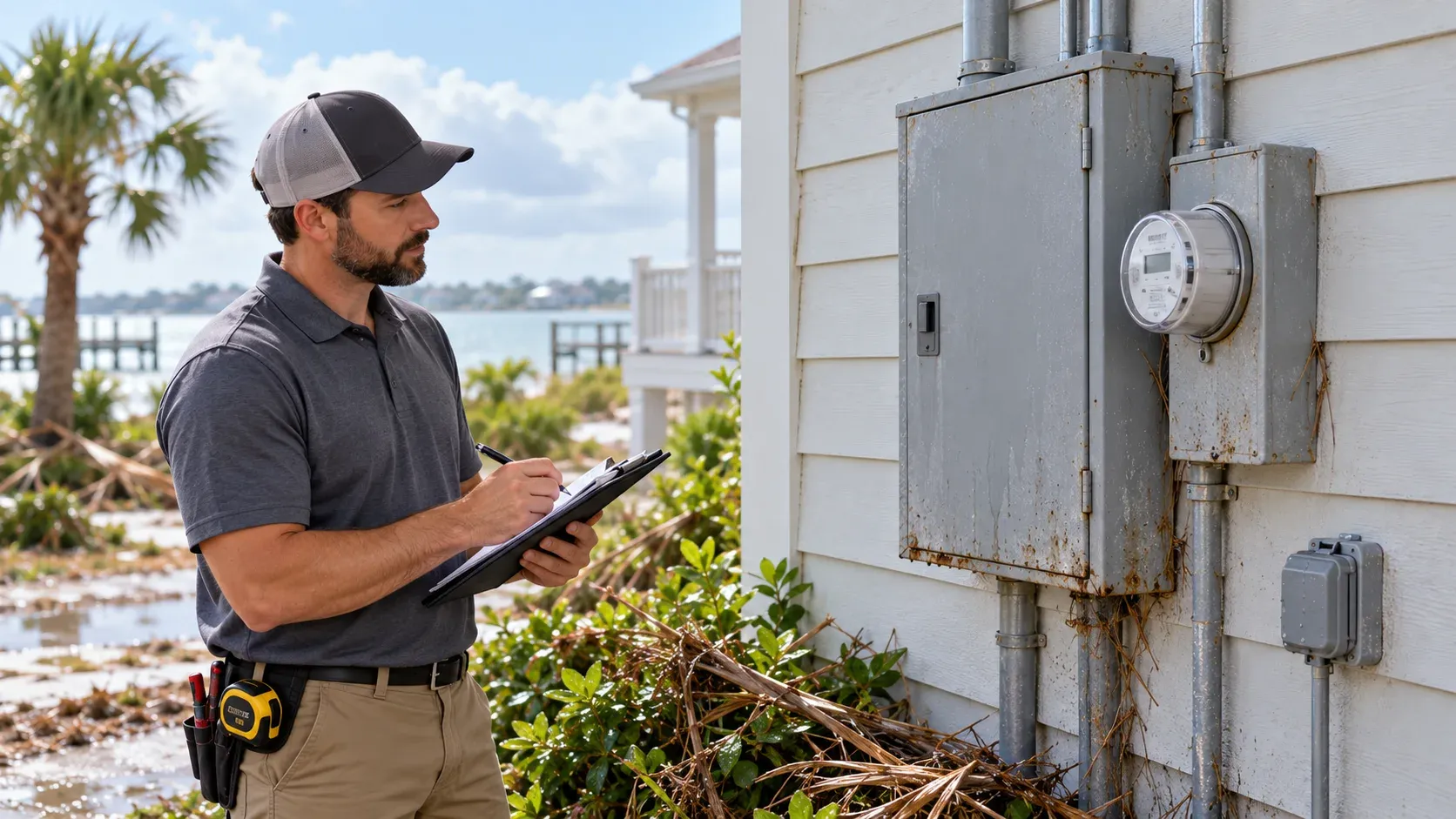
These assemblies contain matched components and critical connections. Evaluation may include the enclosure, internal components, service conductors, grounding and bonding, meter area, ratings, contamination, and utility-controlled equipment. Homeowners should never remove covers for photos or inspection.
Surge protection and connected equipment
A storm can damage a surge protective device or connected equipment even when there was no flood exposure. A visible status indicator can be documented from the outside if it is safely accessible, but the indicator alone does not diagnose the panel, circuit, or every connected load.
Meter and utility equipment
Ownership and responsibility vary by component and utility. The electrician can identify where utility coordination is required and what customer-owned equipment must be repaired before reconnection.
Possible Outcomes Of The Assessment
A storm-damage scope may include one or several of these outcomes:
- No damage found in the assessed equipment. This is a field finding, not something established by appearance from across the room.
- A focused repair. Damaged covers, fittings, devices, wiring sections, or compatible components may be replaceable.
- Equipment replacement. Contamination, corrosion, impact, internal damage, listing limitations, obsolete parts, or unreliable condition may make replacement appropriate.
- Circuit or system work. The damage may extend beyond the first visible device into a circuit, panel, service, or connected equipment.
- Utility, permit, or inspection coordination. Service work and significant repairs may require involvement beyond the electrician.
- Building or remediation work first. Active leaks, structural damage, contaminated materials, or unsafe access may need correction before electrical work can proceed.
North Carolina project requirements vary with the property, work, and authority having jurisdiction. The North Carolina Office of State Fire Marshal provides state code and interpretation resources, but it cannot replace project-specific review.
Prepare For A More Useful Assessment
The goal is not to maximize replacement or minimize the scope before the facts are known. It is to identify what can reliably remain, what must change, and what sequence gets the home back to service without energizing damaged equipment.