Whole-home surge protection is one of those electrical upgrades that quietly does its job in the background. You may never notice it on a normal day, but during a storm, utility switching event, or sudden voltage spike, it can help protect the expensive electronics and appliances your home depends on.
For coastal homeowners around Wilmington, Leland, New Hanover County, and nearby Cape Fear communities, that matters. Salt air, summer storms, lightning, outdoor equipment, HVAC systems, home offices, smart devices, and generator-ready setups all place more attention on one simple question: what happens when extra voltage tries to enter the home? If you already know you want a professional panel review, Coastal Comfort Electric offers whole-home surge protection service for Wilmington-area homes.
What Is Whole-Home Surge Protection?
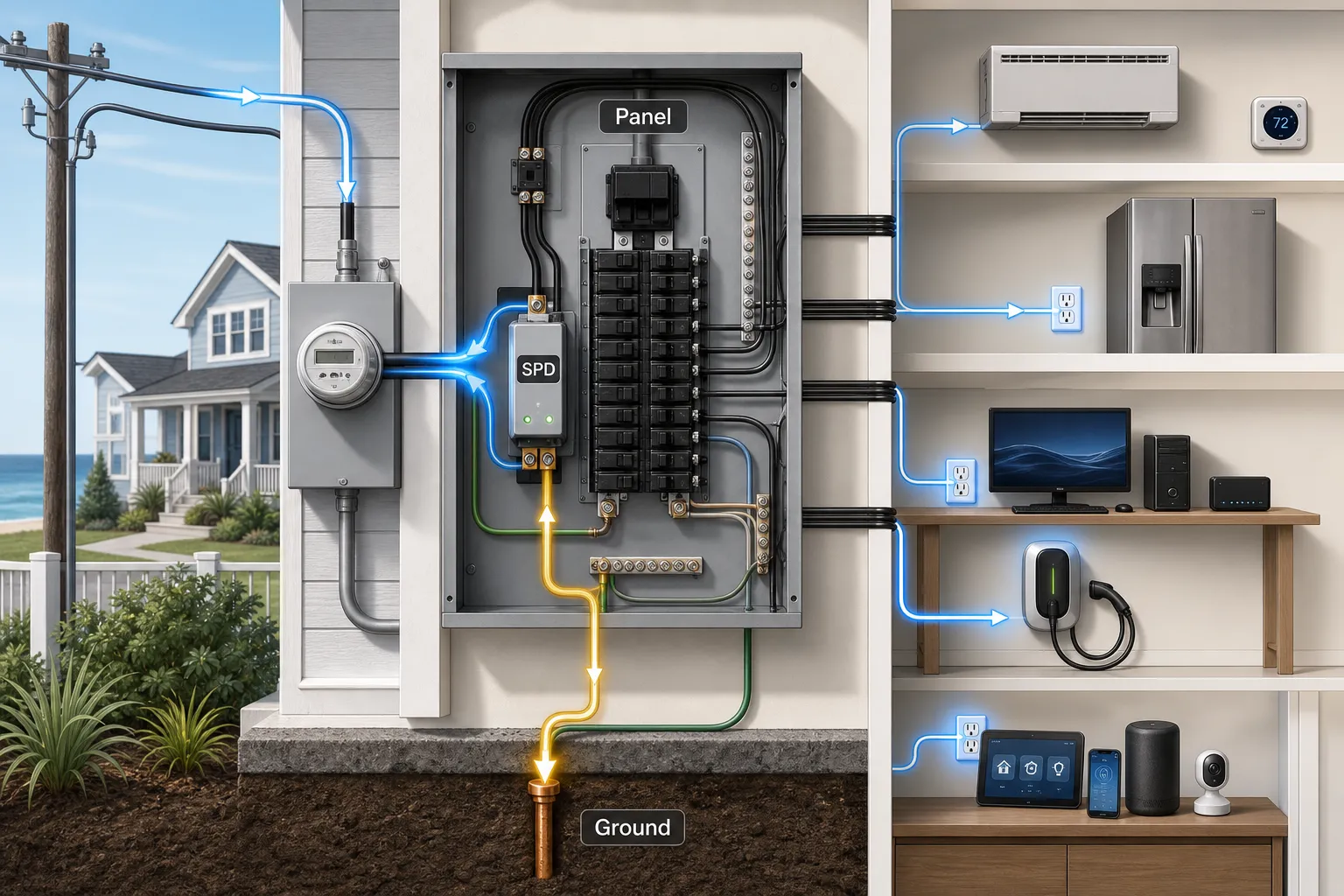
Whole-home surge protection uses a device called a surge protective device, often shortened to SPD. The SPD is typically installed at or near the main electrical panel. Its job is to monitor incoming voltage and react quickly when a surge rises above a safer operating range.
Think of it as a pressure relief path for electrical spikes. Under normal conditions, electricity flows through your panel and out to the circuits feeding lights, outlets, appliances, HVAC equipment, and other loads. When a surge occurs, the SPD helps clamp that excess voltage and divert it toward the home’s grounding and bonding system.
A whole-home surge protector does not make a house immune to every electrical event. It adds a first layer of defense at the panel, reducing the amount of surge energy that can travel deeper into the home.
That distinction is important. Surge protection is about reducing risk, not promising that every device will survive every storm or utility event.
Where Surges Come From
Many homeowners picture lightning first, and lightning is certainly a concern in coastal North Carolina. But not every damaging surge comes from a dramatic strike outside the window.
Common sources include:
- lightning-related activity near the property or utility lines
- power grid switching and utility equipment events
- outages followed by power restoration
- large appliances and motors cycling on and off
- HVAC equipment, pumps, compressors, and other high-demand loads
- generator transfer equipment that needs proper installation and coordination
Some surges are large and sudden. Others are smaller, repeated voltage spikes that can stress sensitive electronics over time. That is why panel-level protection can be useful even when the home already has plug-in power strips.
How A Panel-Mounted Surge Protector Works
A properly selected SPD is connected to the electrical panel so it can respond close to the point where power enters and distributes through the home. When voltage stays within the normal range, the device sits ready. When voltage spikes, internal components react in a fraction of a second and create a safer path for excess energy.
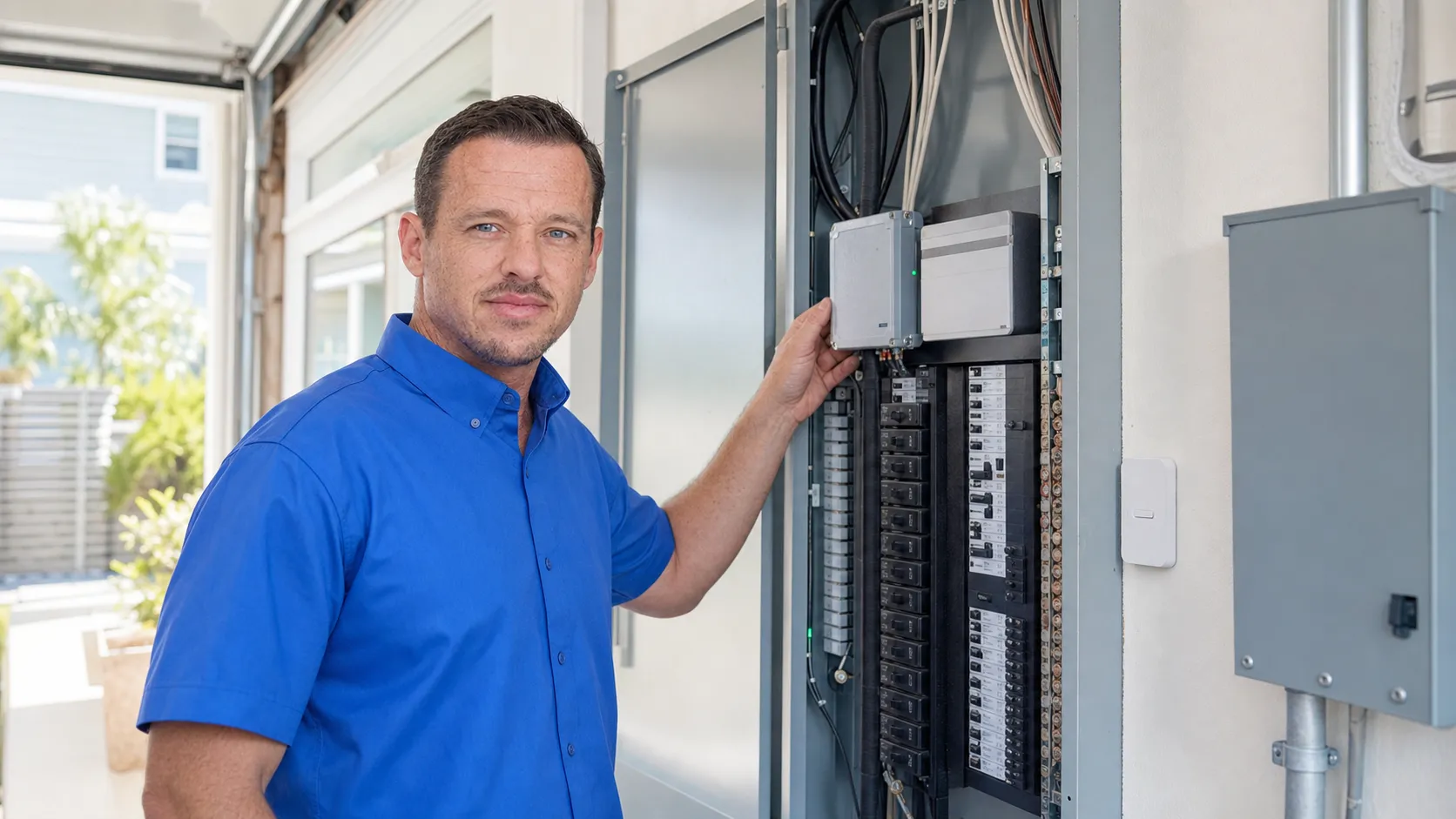
The exact installation depends on the home’s panel, available breaker spaces, manufacturer requirements, grounding and bonding condition, service equipment, and local code considerations. That is why it should be evaluated and installed by a qualified electrician.
Whole-Home Surge Protection Versus Power Strips
Plug-in surge strips still have a place. They can provide point-of-use protection for computers, televisions, routers, and office equipment. But they are not the same as panel-level protection.
| Protection type | Where it works | What it helps protect | Best use |
|---|---|---|---|
| Whole-home SPD | At or near the main electrical panel | Circuits, major appliances, HVAC equipment, and connected loads throughout the home | First layer of defense for the electrical system |
| Plug-in surge strip | At a specific outlet | Devices plugged into that strip | Secondary protection for sensitive electronics |
| UPS battery backup | At a specific device or workstation | Computers, routers, and electronics that need temporary power | Runtime and shutdown protection during outages |
| GFCI/AFCI devices | Outlets or breakers, depending on setup | People and circuits from specific shock or arc-fault hazards | Safety protection, not surge protection |
The best setup is often layered. A whole-home SPD reduces surge energy at the panel, while quality point-of-use protectors add another layer for electronics that are especially valuable or sensitive.
Signs Surge Protection Is Worth Discussing
Surge protection can make sense for many homes, but it is especially worth discussing when the home has valuable electrical equipment or a history of storm-related issues.
It is also a smart conversation during panel replacement or service upgrade planning because the electrician is already reviewing capacity, grounding, breaker layout, and equipment condition.
What An Electrician Checks Before Installation
Whole-home surge protection is not just a matter of buying a device and snapping it in wherever there is room. A good installation starts with the existing electrical system.
An electrician may review:
- The panel type, condition, and available breaker space.
- The service size and how the home is currently loaded.
- Grounding and bonding conditions.
- Manufacturer requirements for the selected SPD.
- Whether the installation should be coordinated with other panel or service work.
- Visible corrosion, moisture concerns, or other coastal-environment issues near equipment.
What Surge Protection Can And Cannot Do
Whole-home surge protection is useful, but it should be explained honestly.
It can help reduce surge voltage before it reaches connected devices. It can add a first layer of protection for hardwired equipment that a plug-in strip cannot cover. It can also pair well with point-of-use protectors for sensitive electronics.
It cannot guarantee that lightning, utility failures, wiring defects, or equipment problems will never cause damage. It also does not replace proper grounding, safe wiring, code-compliant installation, or routine attention to warning signs like burning smells, buzzing equipment, repeated breaker trips, or heat at devices.
A Practical Next Step For Wilmington-Area Homeowners
If you are not sure whether your home already has surge protection, start with a simple check from outside the panel. Look for any visible label or external device near the electrical panel, but do not remove the panel cover. Then gather a few details before requesting service:
- the approximate age of the home and panel
- whether you have had recent outages, storm damage, or equipment failures
- photos of the panel area from a safe distance
- a list of equipment you most want to protect, such as HVAC, computers, refrigerators, security systems, or smart home devices
From there, Coastal Comfort Electric can help determine whether whole-home surge protection is a good fit, whether other panel work should happen first, and what installation path makes sense for your home.
Whole-home surge protection is not flashy, and that is the point. It is a practical layer of defense built into the electrical system so your home is better prepared before the next voltage spike arrives.