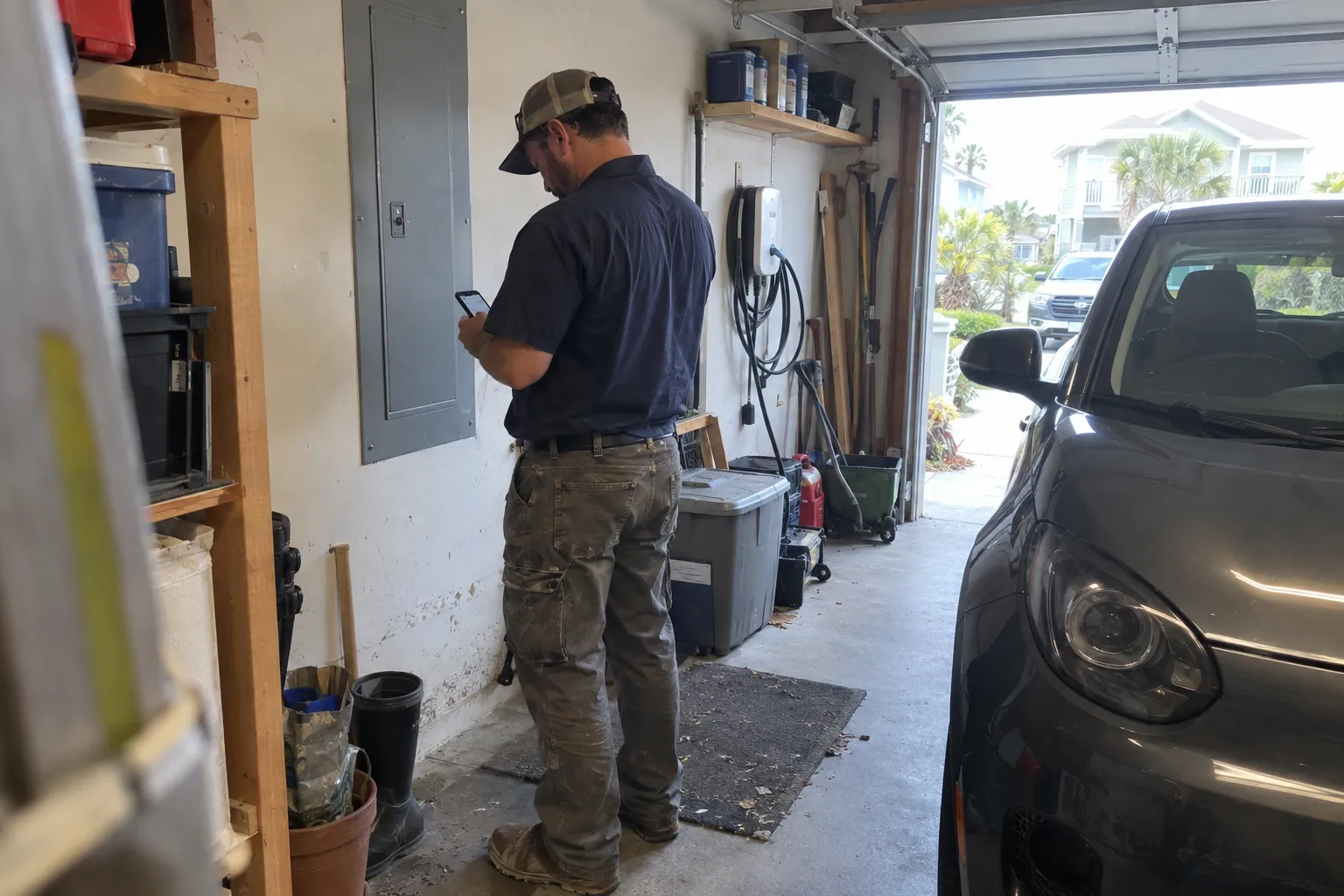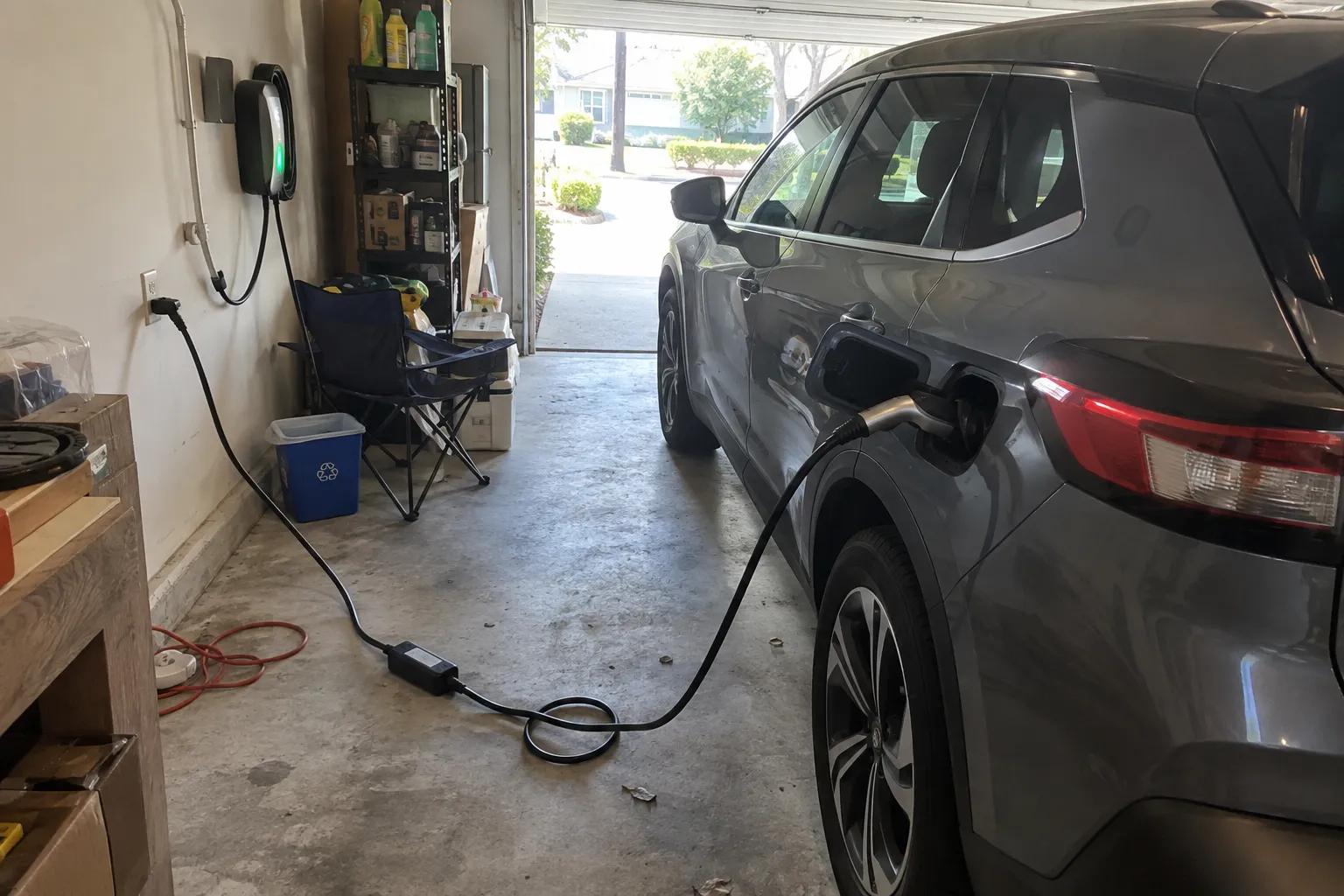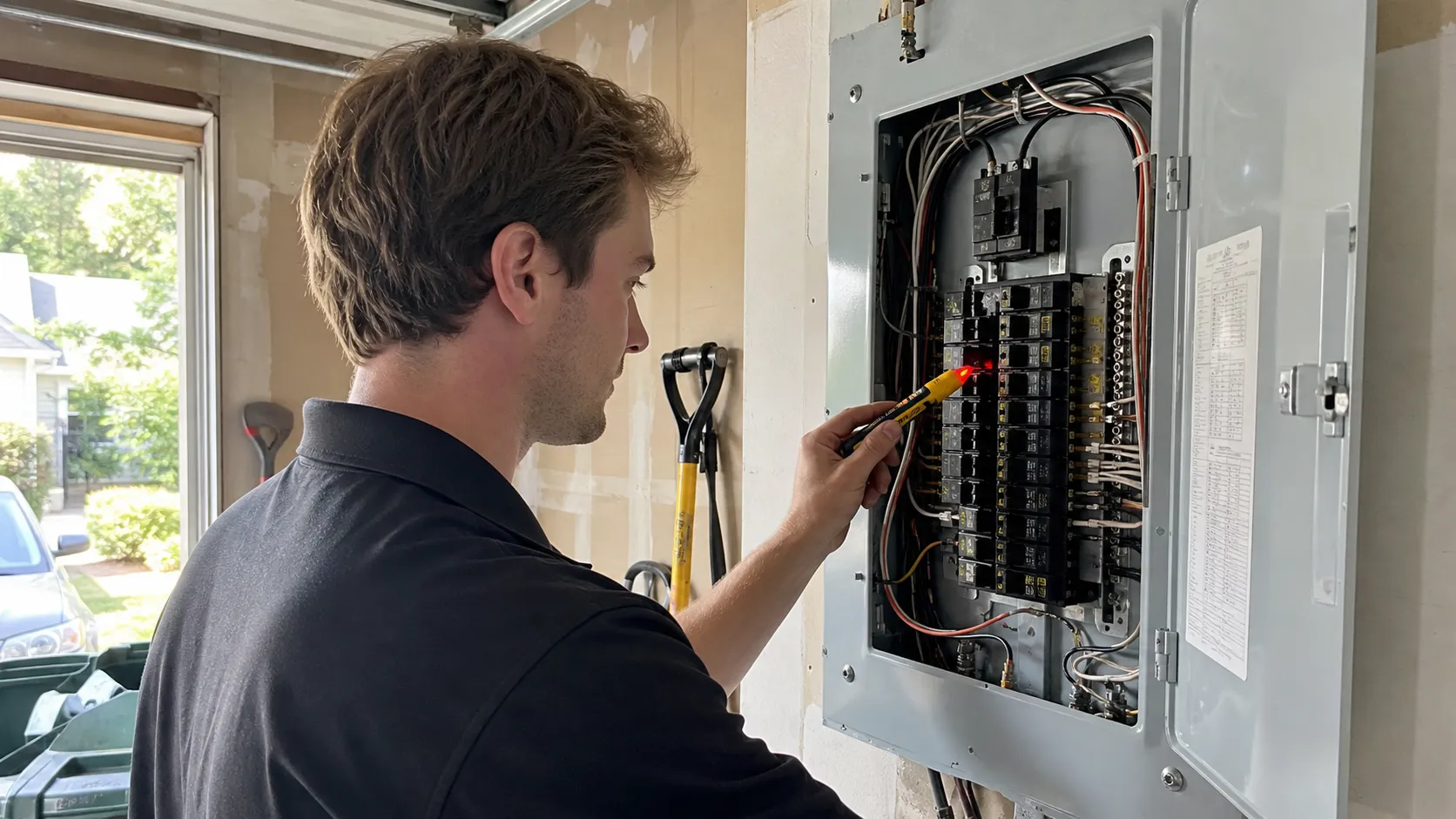
A breaker that trips once may simply be doing its job. A breaker that keeps tripping is different. It is trying to tell you that something on that circuit needs attention.
For homeowners around Wilmington, Leland, New Hanover County, and the Cape Fear region, repeated breaker trips can come from ordinary overloads, damp outdoor equipment, aging wiring, panel issues, or one appliance with a hidden problem. Some causes are simple enough to investigate from the outlet side. Others should be handled by a professional before the circuit is used again.
If the same breaker keeps tripping and you are not sure why, Coastal Comfort Electric offers circuit breaker troubleshooting to help identify whether the issue is the breaker, the connected load, the wiring, moisture, or a larger panel concern.
1. Too Many Things Are Running On One Circuit
This is one of the most common and most DIY-friendly causes. A circuit can trip when the combined load of appliances, tools, lights, heaters, or electronics is more than the breaker is designed to handle.
Safe DIY check: unplug or turn off items on that circuit, reset the breaker once, then plug items back in one at a time. If the breaker only trips when several high-demand devices run together, the circuit may simply be overloaded.
Call an electrician if: the circuit is overloaded during normal use, the breaker trips even with very little plugged in, or you need a new dedicated circuit for equipment you use regularly.
2. A Space Heater, Microwave, Hair Dryer, Or Tool Is Pulling Too Much Power
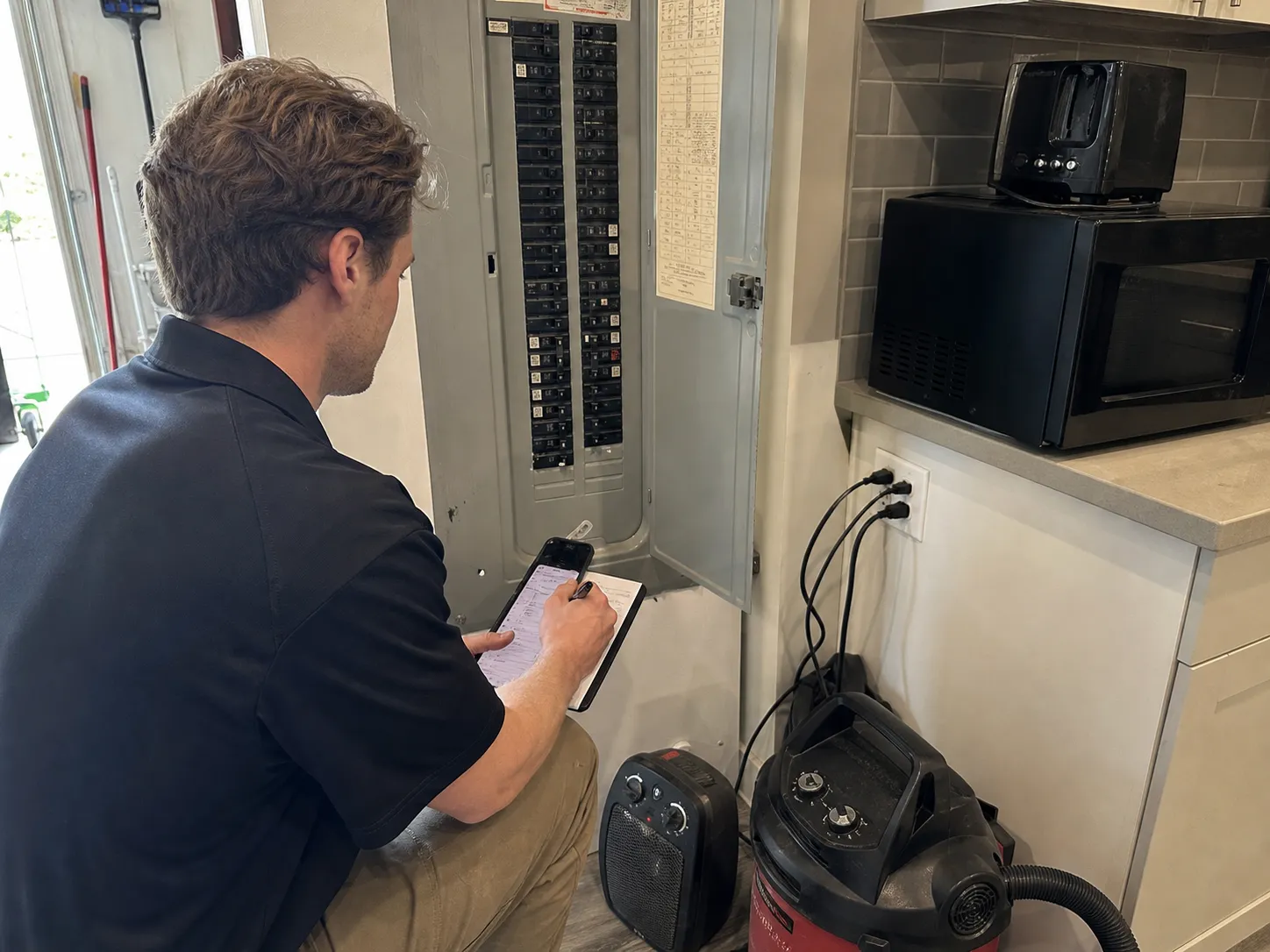
Portable heaters, microwaves, hair dryers, shop vacs, air compressors, and similar devices can draw a lot of power. If one of these shares a circuit with other loads, the breaker may trip even though nothing is “broken.”
Safe DIY check: try the device on a different properly rated outlet on a different circuit, if available. Avoid extension cords for high-demand equipment unless the manufacturer specifically allows it and the cord is properly rated.
Call an electrician if: you need to use the appliance in that location regularly, the device trips multiple circuits, or you are not sure which outlets share the same breaker.
3. One Appliance Has An Internal Problem
Sometimes the circuit is fine and the appliance is the problem. A damaged cord, failing motor, worn heating element, or internal short can trip a breaker when that specific appliance runs.
Safe DIY check: stop using the suspect appliance. If the breaker only trips when that appliance is plugged in or turned on, leave it unplugged until it is repaired or replaced.
Call an electrician if: the breaker keeps tripping after the appliance is removed, the appliance caused heat or sparks at the outlet, or more than one device behaves strangely on the same circuit.
4. A GFCI Or AFCI Breaker Is Detecting A Safety Issue
Modern breakers may include GFCI or AFCI protection. These breakers can trip for reasons beyond basic overload. GFCI protection responds to ground-fault conditions, often related to moisture or leakage current. AFCI protection responds to certain arcing conditions that may indicate a fire risk.
Safe DIY check: look for obvious outlet-side causes such as damp outdoor cords, wet equipment, damaged cords, or a device that trips the breaker every time it runs. Unplug the suspect item and do not use wet or damaged equipment.
Call an electrician if: the breaker trips repeatedly, trips with nothing obvious plugged in, or protects bedrooms, kitchens, bathrooms, garages, exterior outlets, or other areas where the cause is not clear.
5. Moisture Is Affecting Outdoor Or Garage Equipment
Coastal weather, rain, irrigation, humidity, and outdoor storage can create breaker problems. Exterior outlets, garage equipment, landscape lighting, pool equipment, dock power, or damp extension cords can trip a breaker when moisture gets where it should not.
Safe DIY check: from a safe distance, unplug portable outdoor items and let clearly wet portable equipment dry before use. Do not touch wet electrical devices, boxes, or cords while power is on.
Call an electrician if: an outdoor circuit keeps tripping, a cover is damaged, an outlet is loose, water entered a box, or the breaker trips after storms or irrigation.
6. There Is A Short Circuit
A short circuit can happen when current takes a path it should not. This can cause a breaker to trip quickly or immediately. It may involve damaged wiring, a failed device, a pinched cord, or an issue inside equipment.
Safe DIY check: if the breaker trips immediately after you plug in one device, unplug that device and do not use it.
Call an electrician if: the breaker trips immediately with nothing plugged in, the trip is sudden and repeatable, or you notice popping sounds, sparks, heat, or burning smell.
A breaker that trips immediately is not being annoying. It may be preventing heat, shock risk, or damage from getting worse.
7. A Loose Connection Or Damaged Device Is Creating Heat
Outlets, switches, fixtures, and connections can wear out or become damaged. Heat, discoloration, crackling, buzzing, flickering, or a device that feels warm can all point to a concern that should not be ignored.
Safe DIY check: stop using the affected outlet, switch, fixture, or appliance. Do not open the device or continue testing it.
Call an electrician if: anything feels hot, smells burnt, makes noise, flickers repeatedly, or trips the breaker when used.
8. The Breaker Itself May Be Failing
Breakers can wear out, become damaged, or stop holding properly. But replacing the breaker without diagnosing the circuit can miss the real problem.
Safe DIY check: none beyond documenting the symptom. Note which breaker trips, how often, and what was running.
Call an electrician if: the breaker feels loose, will not reset, trips under light load, or has visible damage. Breaker replacement should be matched to the panel and diagnosed safely.
9. The Panel Or Circuit Is Not Matched To Modern Loads
Older homes may have circuits that were not planned for today’s kitchens, home offices, garages, HVAC equipment, EV chargers, smart devices, and workshop tools. Sometimes the breaker is not the only issue. The home may need load planning, a dedicated circuit, panel work, or a broader electrical review.
Safe DIY check: make a list of what has changed recently: new appliances, new tools, new office equipment, a remodel, outdoor equipment, or a room being used differently.
Call an electrician if: normal daily use keeps tripping breakers or you are planning a new high-demand load.
10. The Circuit Has A Hidden Wiring Problem
Wiring problems can be hidden behind walls, in attics, in crawlspaces, outdoors, or inside old devices. Damaged cable, poor past repairs, moisture, rodent damage, loose terminations, and aging materials can all create breaker trips.
Safe DIY check: do not open walls, devices, or the panel. Gather clues instead: affected rooms, timing, weather, appliances in use, recent work, and whether the problem is getting worse.
Call an electrician if: the breaker trips with no obvious appliance cause, affects multiple outlets or rooms, follows a storm or water event, or happens in an older home with dated wiring.
Quick Guide: DIY Check Or Call An Electrician?
| Situation | Safe DIY next step | When to call |
|---|---|---|
| Breaker trips when several appliances run together | Unplug items and reduce the load | If normal use overloads the circuit |
| One appliance trips the breaker | Stop using that appliance | If the circuit still trips without it |
| Outdoor or garage circuit trips after rain | Unplug portable items from a safe, dry position | If outlets, covers, cords, or boxes may be wet or damaged |
| Breaker trips immediately | Stop resetting it | Call for troubleshooting |
| Heat, buzzing, sparks, or burning smell | Stop using the circuit | Call right away |
| Breaker trips with nothing plugged in | Do not keep resetting it | Call for diagnosis |
The Bottom Line
A breaker trip is a symptom. Sometimes the fix is as simple as moving a high-demand appliance to another circuit or replacing a faulty device. Other times, the breaker is protecting the home from a wiring fault, moisture problem, damaged equipment, or panel issue.
The safest approach is to do the simple outlet-side checks, document what happened, and stop when the pattern points beyond an obvious overload. If the same breaker keeps tripping, Coastal Comfort Electric can provide circuit breaker troubleshooting for Wilmington-area homes and help you move from repeated resets to a clearer repair plan.