
Smoke alarm chirping is usually a device signal, but many homeowners describe the same intermittent sound as beeping. The pattern does not mean the same thing on every alarm. Coastal Comfort Electric’s smoke detector installation service helps Wilmington-area homeowners review expired devices, hardwired alarms, interconnection, compatibility, and replacement options when the model instructions do not resolve the concern.
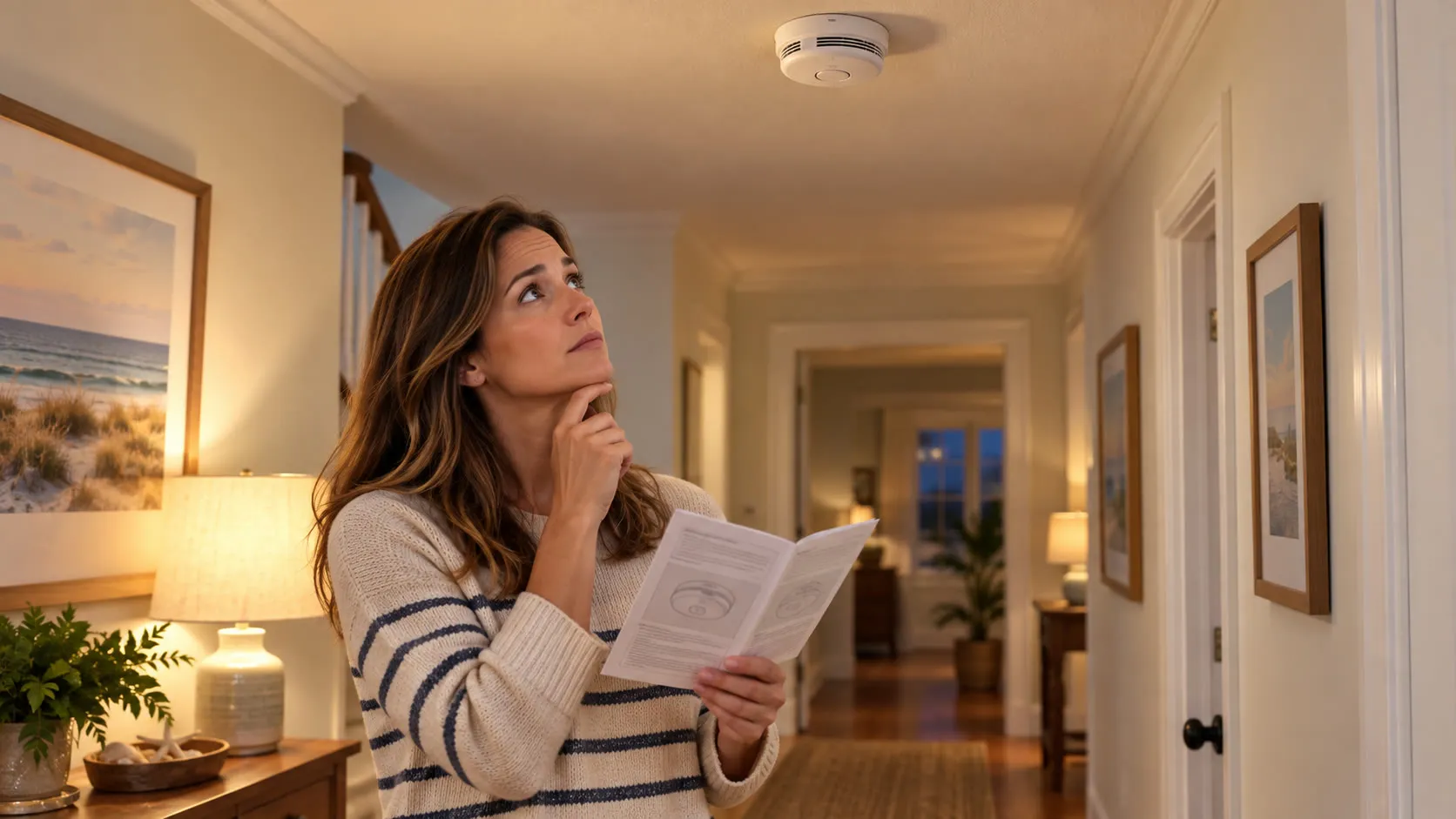
Before you replace anything, decide whether you are hearing an active alarm or an occasional chirp or beep. Then identify the exact alarm and follow its manual. Do not rely on a generic “number of beeps” chart unless it is published for that model.
Active Alarm, Chirp Or Beep, Or Nuisance Activation?
Active alarm
An active alarm is the urgent signal the device uses when it detects smoke or receives an interconnected alarm signal. Voice messages, light patterns, and tones vary. Treat it according to the household escape plan and the product instructions.
Intermittent chirp
A brief chirp or beep separated by longer quiet periods may indicate a low battery, end-of-life condition, fault, power issue, or another maintenance status. The manual and label for the exact model are the authority.
Nuisance activation
Cooking particles, steam, dust, insects, unsuitable placement, airflow, aerosols, or contamination may trigger unwanted alarms. A nuisance activation still should not be “fixed” by removing the battery or leaving the alarm disconnected.
Common Reasons A Smoke Alarm Chirps Or Beeps
1. The Backup Or Replaceable Battery Needs Attention
A replaceable battery may be low, loose, incorrectly installed, or unable to make reliable contact. A hardwired alarm can still chirp because many models use a backup battery.
Follow the manufacturer’s steps for the exact device. Use the specified battery type, confirm orientation, close the battery compartment completely, and use the listed test procedure. Do not substitute a battery chemistry or shape that merely fits.
2. The Alarm Has Reached End Of Life
Smoke alarms do not last indefinitely. Many models signal when their service life has ended, but the replacement interval and end-of-life pattern vary. Check the manufacture date, replacement date, label, and manual.
The U.S. Fire Administration advises replacing smoke alarms when they are 10 years old, unless the manufacturer specifies otherwise. A combination alarm may have different sensor or replacement requirements, so use the device instructions.
3. The Alarm Needs Cleaning Or Maintenance
Dust, insects, cooking residue, and other contamination can interfere with some alarms. Follow the manufacturer’s cleaning directions. Usually that means gentle exterior or vent cleaning with an approved method—not opening the sensing chamber, spraying chemicals, painting the alarm, or using compressed air unless the manufacturer specifically allows it.
If chirping or beeping returns quickly after the listed maintenance, document the behavior and consider replacement or professional review.
4. Power Was Interrupted
A hardwired alarm may react to a loss of household power, a tripped circuit, a loose connection, or restoration after an outage. Other alarms on the circuit may behave differently depending on their model and backup condition.
Do not remove a hardwired alarm or handle its wiring to investigate. Check only ordinary household indicators that are safe to observe, such as whether nearby lights or receptacles also lost power. If the circuit trips, the alarm loses power repeatedly, or the wiring is uncertain, call for electrical review.
5. The Devices Are Incompatible
Interconnected alarms need compatible devices and connection methods. A replacement that fits the old plug may still be incompatible with the remaining alarms, wiring, communication module, or system.
Warning signs include chirping that began after one device was replaced, alarms that no longer sound together during the listed test, mixed model families, or an adapter used without clear manufacturer approval.
6. The Device Is Reporting A Fault
A sensor, processor, connection, or internal component can fail. Some devices use a chirp, status light, voice message, or combination to report a fault.
Write down the exact pattern and contact the manufacturer or installer with the model and date. Do not assume that a new battery clears every fault.
7. Placement Is Causing Repeated Nuisance Alarms
An alarm placed too close to cooking, steam, moving air, or another unsuitable condition may activate repeatedly. The right correction depends on the product instructions and the room—not on disabling the nearest alarm.
If the home lacks another suitable location, or relocation requires hardwired changes, request an installation assessment.
A Safe Smoke Alarm Chirping Checklist
What Not To Do
- Do not remove the battery and leave the alarm disabled.
- Do not disconnect a hardwired alarm and tuck the wires into the ceiling.
- Do not cover the alarm, paint it, tape over vents, or relocate it without checking placement instructions.
- Do not assume every chirp means low battery.
- Do not ignore an end-of-life or fault signal because the test button still makes noise.
- Do not replace one interconnected alarm based only on connector shape.
The U.S. Consumer Product Safety Commission’s smoke-alarm guidance stresses keeping alarms working and testing them according to the manufacturer’s instructions.
When To Call An Electrician Or Installer
Professional review is appropriate when:
- A hardwired alarm repeatedly loses power or trips a circuit.
- Chirping began after an alarm was replaced or interconnected devices were mixed.
- The connector, wiring, or electrical box is damaged.
- Alarms do not sound together during the manufacturer’s interconnection test.
- The home has missing devices, remodel changes, or uncertain placement.
- An expired group of alarms needs a coordinated replacement plan.
- Accessibility devices or a listed household system must be integrated.
Bring the model numbers, manufacture dates, photos of the installed devices, and the exact signal pattern. Do not remove hardwired alarms simply to prepare for the appointment.
Keep The Protection While You Solve The Chirp
The most important rule is simple: a frustrating sound is not a reason to leave the home unprotected. Identify the alarm, use the exact instructions, replace expired or faulted equipment with compatible devices, and get help when the issue involves wiring or interconnection.
If smoke alarm chirping continues after the manufacturer’s maintenance steps—or the home needs a coordinated hardwired replacement—request a smoke alarm installation assessment for a safer, clearer next step.