Storm damage electrical repair should begin before anyone assumes the house is ready to use power again. Coastal Comfort Electric’s storm damage electrical repair service helps Wilmington-area homeowners assess water exposure, exterior damage, affected circuits, and service equipment before damaged electrical systems are re-energized.
The utility restoring power to the street means its system can deliver electricity. It does not confirm that your panel, meter equipment, outdoor devices, wiring, appliances, or circuits were protected from flooding, wind-driven rain, roof leaks, impact, or surge effects.
When The Power Should Stay Off
Treat the electrical system as needing qualified review when any of these conditions apply:
- Floodwater, storm surge, or indoor water reached outlets, appliances, wiring, a panel, or other electrical equipment.
- A roof or plumbing leak ran through ceilings or walls that contain electrical devices.
- Wind, trees, debris, or construction damage struck the service mast, meter area, panel, outdoor disconnect, fixtures, or receptacles.
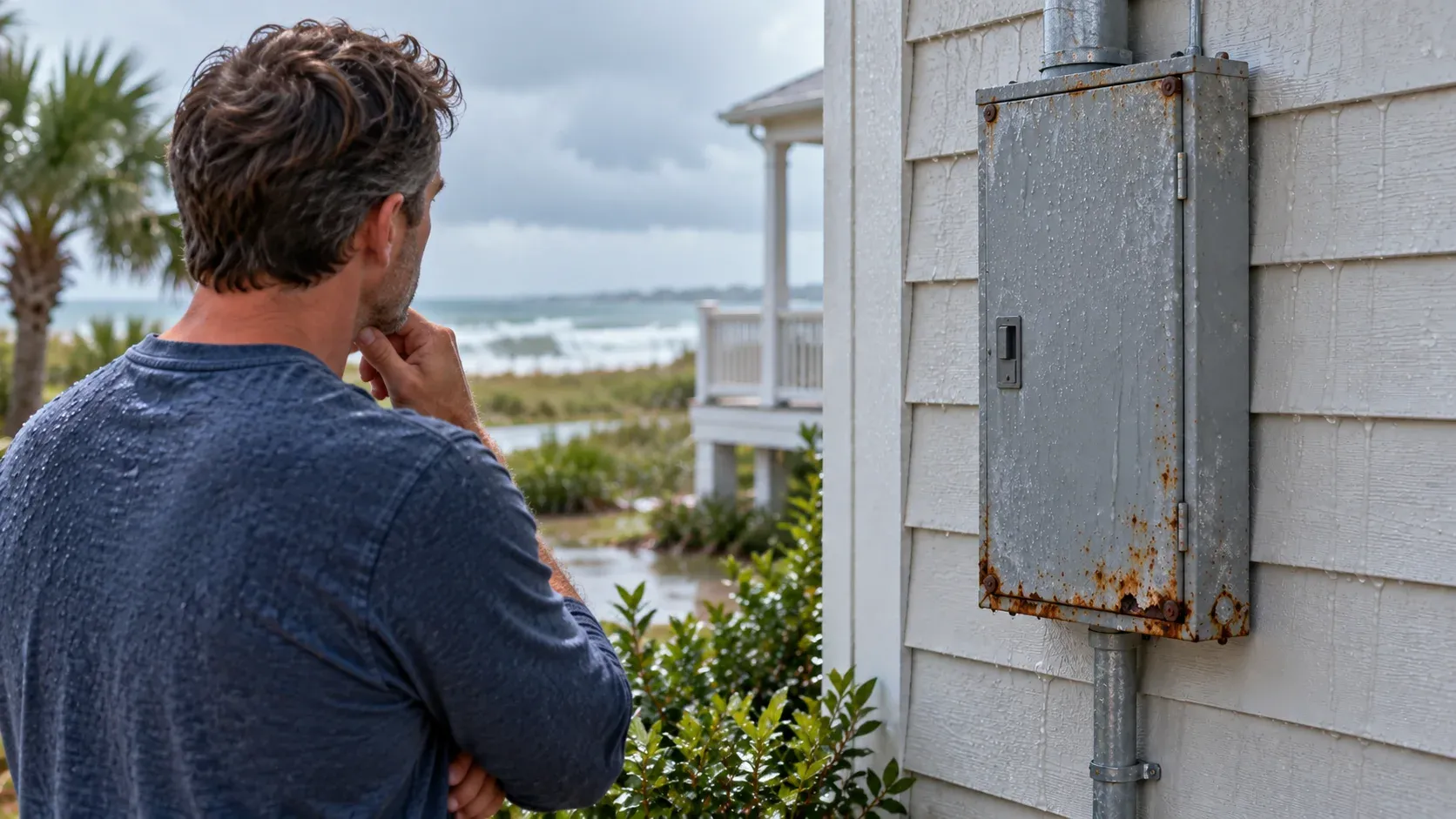
- Covers are broken, enclosures are bent, conduit has pulled away, or equipment is visibly corroded or displaced.
- You noticed burning odor, heat, buzzing, sparking, repeated trips, partial power, or equipment failures after the storm.
- The home was inaccessible long enough that the extent or duration of water exposure is unknown.
The Ready.gov flood guidance warns people not to touch wet electrical equipment or approach it while standing in water. Dry-looking surfaces do not establish that insulation, connections, protective devices, or internal components are safe.
Why “It Dried Out” Is Not A Safety Test
Water can carry dirt, salt, sewage, and other contaminants into equipment. Wind-driven rain may enter through a damaged cover or conduit connection without leaving an obvious puddle. Corrosion and residue can remain after visible moisture disappears.
Electrical equipment is also built and listed for specific conditions. A device that was designed for a dry indoor wall may respond differently to flooding than weather-rated exterior equipment. Even outdoor equipment can be damaged when seals, covers, mounting, or conduit connections fail.
That is why repairability cannot be decided by waiting a day, wiping a cover, or trying a breaker. Identification, exposure history, inspection, manufacturer guidance, and appropriate testing all matter.
Utility, Electrician, Inspector, And Remediation Roles
Post-storm recovery may involve several parties with different responsibilities:
- Emergency responders or local authorities decide when an area or building may be entered after a major event.
- The utility addresses its lines, transformers, connections, and utility-controlled equipment. It may disconnect or reconnect service, but it does not inspect every circuit and device in the home.
- A qualified electrician evaluates the customer-owned electrical system, identifies affected equipment, and develops a repair, replacement, testing, and re-energization scope.
- The authority having jurisdiction or inspector determines applicable permit and inspection requirements for the work.
- Water, building, roofing, or environmental remediation professionals address moisture sources, contamination, structural damage, and materials outside the electrician’s scope.
North Carolina electrical requirements depend on the project, property, adopted rules, and authority involved. The North Carolina Office of State Fire Marshal publishes state electrical-code information and interpretations, but a website cannot determine the required correction for a particular damaged home.
What You Can Document Safely
Only document conditions after authorities permit entry and from a dry, stable location that does not require touching or moving electrical equipment.
Do not move debris resting on electrical equipment, enter standing water for a better photo, remove covers, or handle damaged cords and appliances.
What Happens Before Re-Energization
The assessment may start with the service entrance and proceed through panels, affected circuits, exterior devices, connected equipment, grounding and bonding components, and areas where water traveled. Some components may be suitable for cleaning, testing, repair, or reuse under applicable manufacturer and professional guidance. Others may need replacement because contamination, corrosion, physical damage, or listing limitations make reliable reuse inappropriate.
The sequence matters. Repairing a damaged outlet does not solve an active roof leak. Restoring one circuit does not clear equipment elsewhere in the home. A responsible plan identifies the exposure, stops the source, defines affected equipment, completes required work, and verifies conditions before power is returned to the affected system.
If your Wilmington-area home has wet, displaced, corroded, or visibly storm-damaged electrical equipment, keep it out of use and arrange a field assessment. The question is not merely whether utility power is available. It is whether the equipment at the property can receive that power safely.