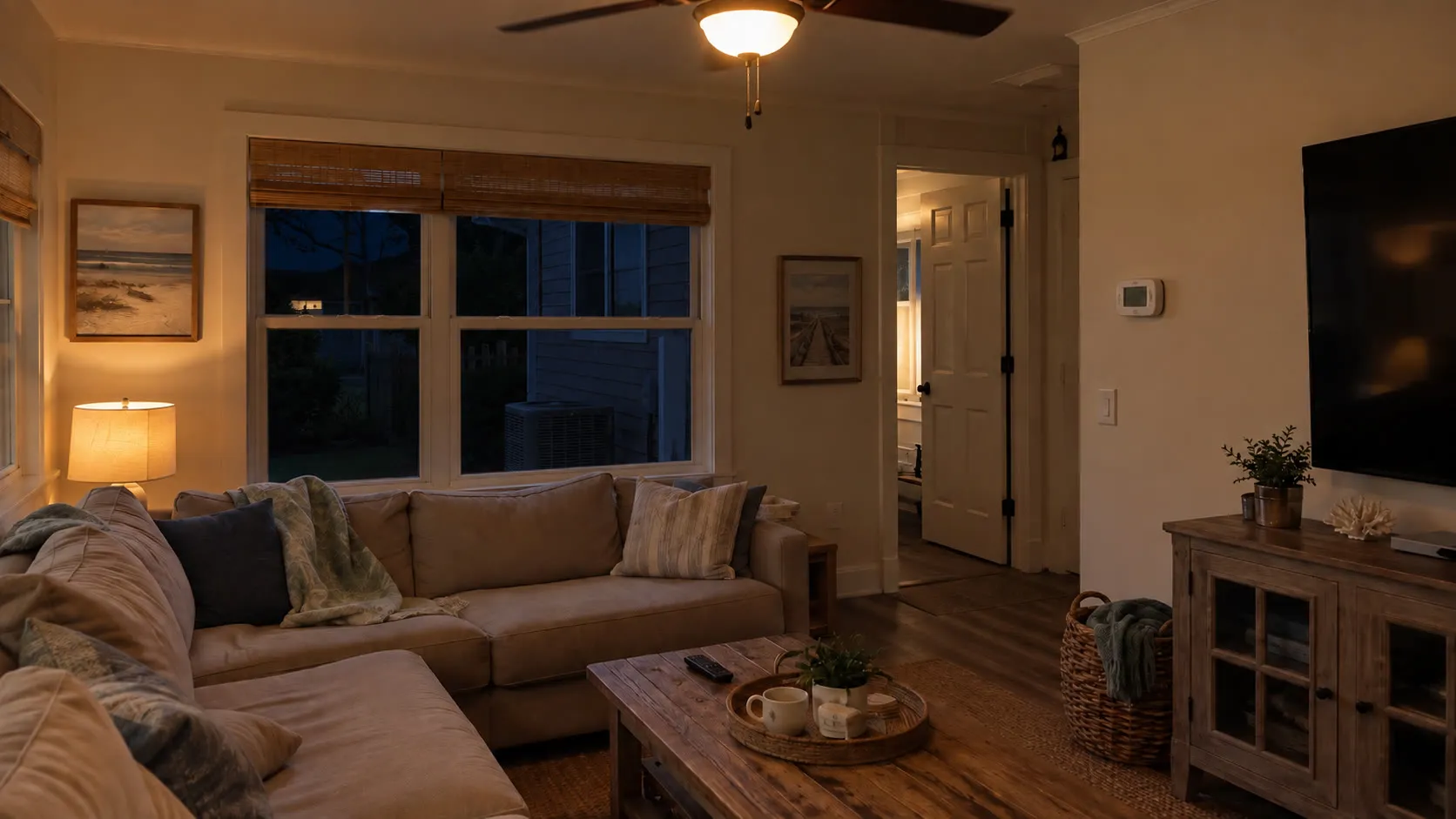

If your lights flicker when the AC turns on, pay attention to how long it lasts and whether it is changing. A momentary dim at startup is different from lights pulsing through the cooling cycle, flickering in several rooms, or getting noticeably worse over time. The pattern does not tell you by itself whether the issue is the air conditioner, a connection, the home’s electrical service, or something else. Coastal Comfort Electric’s flickering-lights service can help Wilmington-area homeowners investigate the electrical side of that question.
Why Can Cooling Startup Affect The Lights?
An air conditioner is a significant electrical load. When its motor starts, current demand changes quickly. In a healthy installation, the effect on lights may be brief or barely noticeable. More obvious, persistent, or worsening flicker needs investigation; it should not be dismissed as “just what AC units do.”
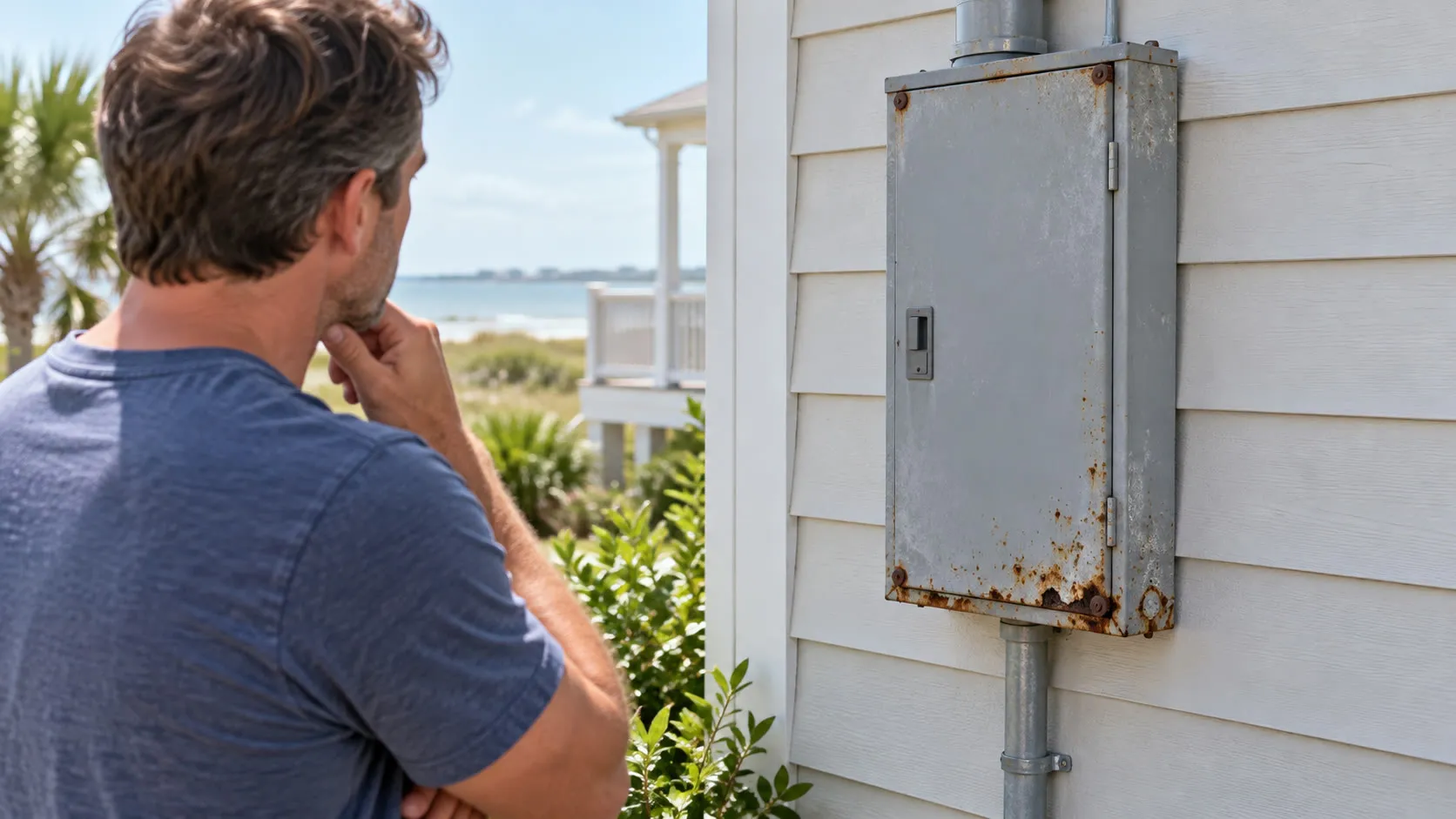
Possible causes include a problem with the AC equipment, a loose or deteriorating electrical connection, an issue with a circuit or panel, or a supply problem. LED bulbs and dimmers can also make a voltage change more visible in one fixture than another. These are possibilities—not a diagnosis based on seeing one flicker.
The Electrical Safety Foundation International specifically lists lights that get brighter or dimmer when other appliances turn on or off among signs that merit an electrical inspection.
Which Details Help Narrow It Down?
Observe the system from normal living areas; there is no need to touch electrical equipment.
- Only at startup or all the time? A single brief dip at the moment the compressor starts is a different pattern from repeated flickering throughout a cooling cycle.
- One fixture or many rooms? One lamp may point toward its bulb, fixture, or dimmer; multiple unrelated rooms deserve a broader electrical review.
- New or getting worse? A change from the home’s usual behavior is worth mentioning.
- Other symptoms? AC trouble starting, unusual equipment noise, repeated breaker trips, or poor cooling may mean HVAC equipment needs service as well.
- Weather or neighborhood pattern? If neighbors notice similar power changes, contact the utility.
If the unit starts and stops rapidly without completing a normal cooling cycle, that is a separate HVAC symptom. Carrier’s homeowner guidance describes short cycling as an equipment problem that should be checked rather than assumed to be normal startup.
Electrician, HVAC Technician, Or Utility?
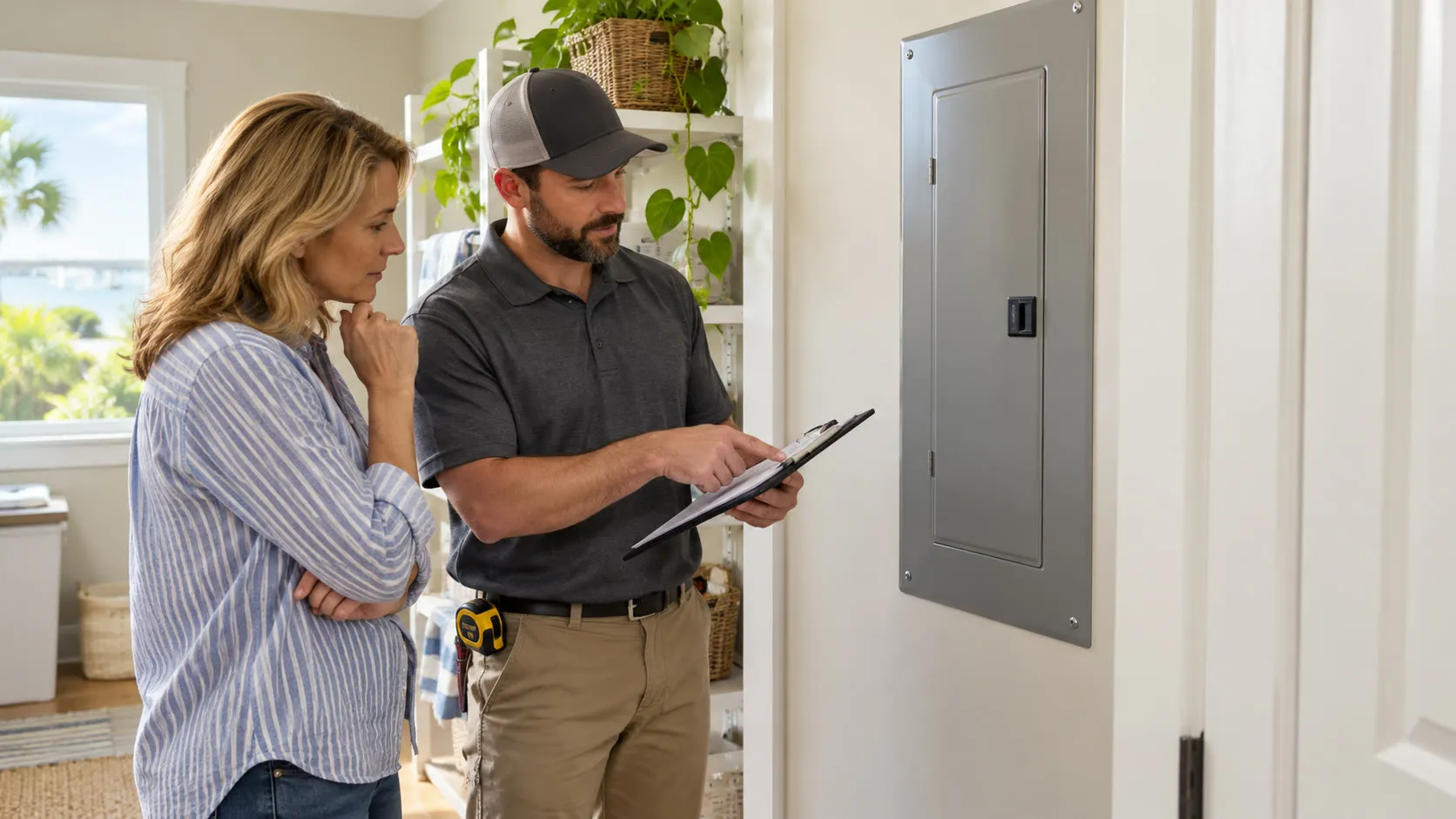
An electrician can evaluate the home-side electrical connections, panel, circuits, and voltage behavior and determine whether the installation appears to support the equipment properly. An HVAC technician can diagnose the air conditioner’s motor, controls, and mechanical operation. Depending on the findings, both trades may be involved. If the behavior affects the whole home or seems to come from the supply, the utility may need to investigate its side.
You do not need to choose the cause before calling. Describe the timing and affected rooms; that helps the first professional route the issue correctly.
Common Questions
Is a split-second dim when the AC starts normal?
A brief change can occur when a large motor starts, but its presence alone does not prove the electrical system is healthy. If it is pronounced, new, recurring across the home, or worsening, have it checked—especially if other warning signs are present.
Will a larger breaker fix the flicker?
No one should increase breaker size as a guess. The breaker must match the circuit and equipment design. The cause needs diagnosis before a repair or equipment change is recommended.