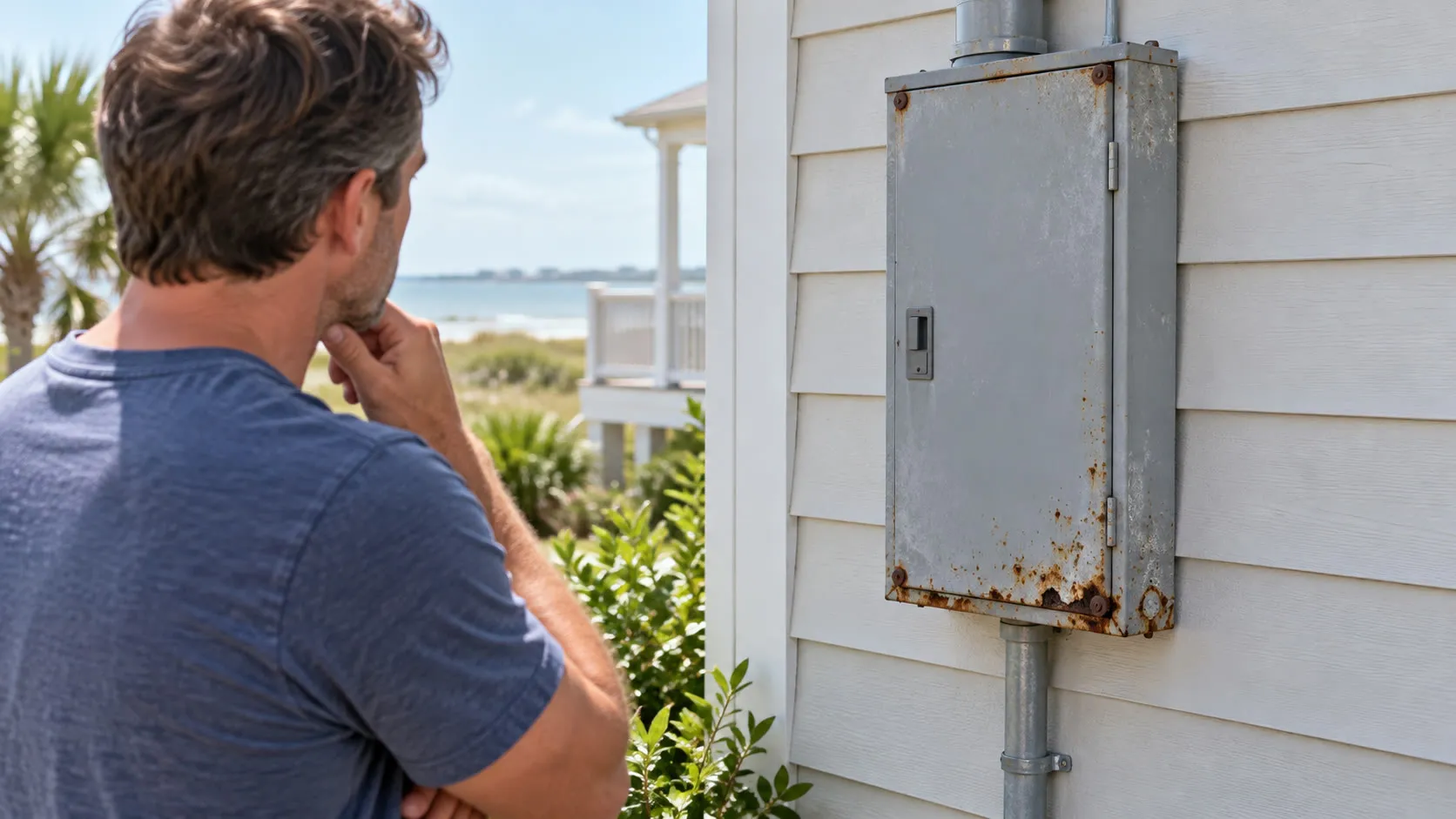

A rusted electrical panel is more than a cosmetic question because corrosion can signal repeated moisture exposure, a damaged enclosure, or deterioration that cannot be judged from the outside. Coastal Comfort Electric’s electrical panel upgrade and replacement service helps Wilmington-area homeowners determine whether the actual condition calls for maintenance, repair, replacement, utility coordination, or a broader service review.
Visible rust does not prove that the entire panel is unsafe, and a clean exterior does not prove that moisture never entered. The location, enclosure condition, equipment markings, internal condition, connected service equipment, and source of the moisture all matter.
Why Outdoor Panels Rust In Coastal North Carolina
Outdoor electrical equipment is built for weather exposure when it is correctly selected, installed, and maintained. Even so, Wilmington and Cape Fear properties may face salt air, wind-driven rain, humidity, irrigation, flooding, storm damage, and years of sun and temperature changes.
Corrosion may begin around:
- Hinges, latches, screws, and seams.
- The lower edge of the enclosure where water sits.
- Conduit entries or unused openings.
- Meter equipment and service components near the panel.
- Scratched or damaged protective coatings.
- Areas where runoff, sprinklers, vegetation, or debris keep the enclosure damp.
A rust stain by itself does not reveal what is happening behind the cover. That is why the safest homeowner task is documentation, not investigation.
When Is Rust More Concerning?
The enclosure has holes, swelling, flaking, or an opening
Surface discoloration and metal loss are different conditions. Holes, separated seams, deep flaking, a door that no longer closes properly, or missing hardware can compromise the enclosure’s ability to protect the equipment inside.
You see water tracks or moisture nearby
Look from a safe distance for stains below the enclosure, damp siding, water marks, a damaged conduit connection, irrigation spray, roof runoff, or recent flood exposure. Do not touch the panel to check whether it is wet.
Breakers trip, lights flicker, or power changes
Corrosion plus electrical symptoms deserves prompt review. Repeated trips, partial power, dimming, buzzing, burning odor, or equipment that behaves differently after rain may point to a problem that extends beyond surface rust.
The panel, meter, or nearby wall feels hot or smells burnt
Do not repeatedly touch the equipment to compare temperatures. Heat, discoloration, odor, buzzing, or crackling changes the situation from “schedule an inspection” to “stop using the affected area and call for guidance.” The Electrical Safety Foundation International identifies warmth, discoloration, burning odor, and unusual sounds as electrical warning signs.
Storm, impact, or construction damage changed the enclosure
A falling branch, siding work, pressure washing, flooding, or another impact can damage seals and fittings even if the panel door still appears closed.
Does A Rusted Panel Always Need Replacement?
No. The visible rust may be limited to a replaceable enclosure component or superficial exterior area, but it can also accompany deterioration that makes safe repair impractical. The correct recommendation depends on the equipment and the conditions found during inspection.
Possible outcomes include:
- Correcting the moisture source. Drainage, irrigation, damaged fittings, or another building condition may need attention so corrosion does not continue.
- A limited repair. A qualified electrician may identify serviceable components or connections that can be repaired with listed, compatible parts.
- Panel replacement. Replacement may be appropriate when the enclosure or internal equipment is damaged, obsolete, contaminated, or no longer reliably serviceable.
- Meter or utility work. Some equipment belongs to or is controlled by the utility. The electrician can identify where utility coordination is required.
- A larger service upgrade. This is a separate decision based on condition, capacity, project goals, grounding and bonding, service equipment, and utility requirements—not rust alone.
Do not let anyone decide the full scope from one exterior photo. Photos can help prioritize the visit, but they cannot show internal damage, compatibility, or service condition.
What Can You Safely Photograph?
Take photos only from a dry, stable location without leaning on or touching the equipment.
Also write down when you first noticed the corrosion, whether it changes after rain, and any breaker, lighting, odor, heat, sound, or power symptoms.
What Not To Do Around A Corroded Panel
- Do not remove the cover or open a meter enclosure.
- Do not sand, wire-brush, paint, or spray the panel while it is installed.
- Do not caulk seams or block designed drainage openings.
- Do not pressure-wash nearby electrical equipment.
- Do not reset breakers repeatedly when corrosion appears with trips or power problems.
- Do not assume the utility owns every outdoor box—or that the homeowner owns every part of the service.
Outdoor electrical equipment must remain accessible and protected. The U.S. Consumer Product Safety Commission’s home electrical safety guide recommends professional attention for damaged electrical systems rather than homeowner repairs inside service equipment.
Prepare For A Better Panel Assessment
Before the appointment, clear ordinary storage from the approach only if doing so does not require touching the panel or standing in water. Share the safe photos, symptoms, recent storms or flooding, known equipment age, previous electrical work, and any future plans such as an EV charger, remodel, generator, or large appliance.
That information helps separate two questions:
- What condition is the existing equipment in today?
- What should the home’s electrical system support next?
A rusted electrical panel may need a straightforward repair, a planned replacement, utility coordination, or a wider service project. A field assessment is the step that turns a concerning exterior clue into a responsible scope for your Wilmington-area home.