
When power goes out in some rooms but not others, the first useful clue is which things still work. One dark room may point toward a tripped protective device or one circuit. Lights that suddenly grow unusually bright or dim across different areas, or multiple large appliances acting oddly, may point to a more serious supply problem. Neither can be diagnosed from the room pattern alone. Coastal Comfort Electric offers residential power-loss troubleshooting for Wilmington-area homes when the cause is not obvious.
What Can You Check Without Opening Anything?
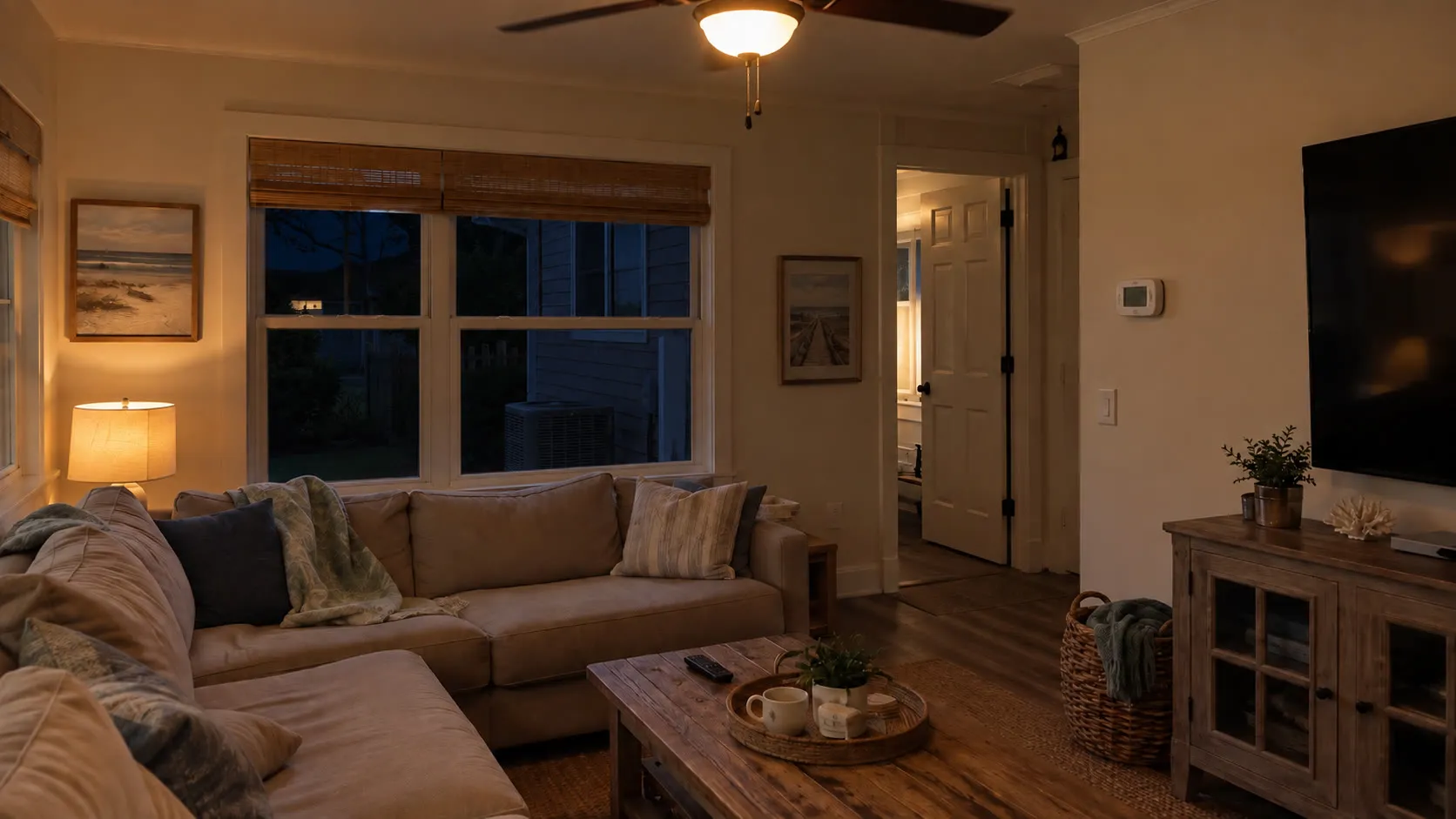
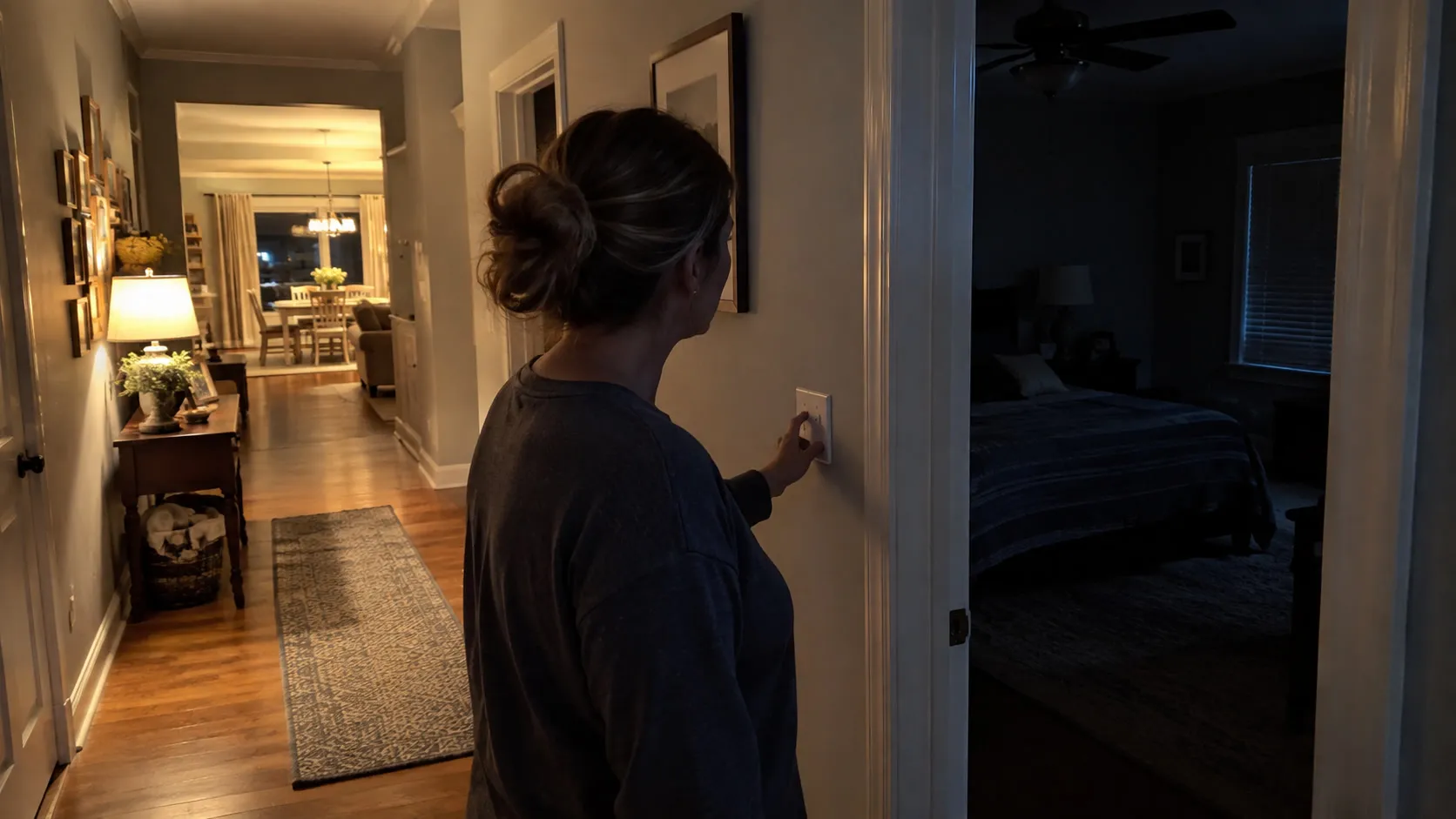
First, note the boundary of the outage. Are only the outlets in one room affected? Do ceiling lights still work? Are the refrigerator, air conditioner, water heater, or other major appliances operating normally? This information is more useful than assuming the whole home is on one circuit.
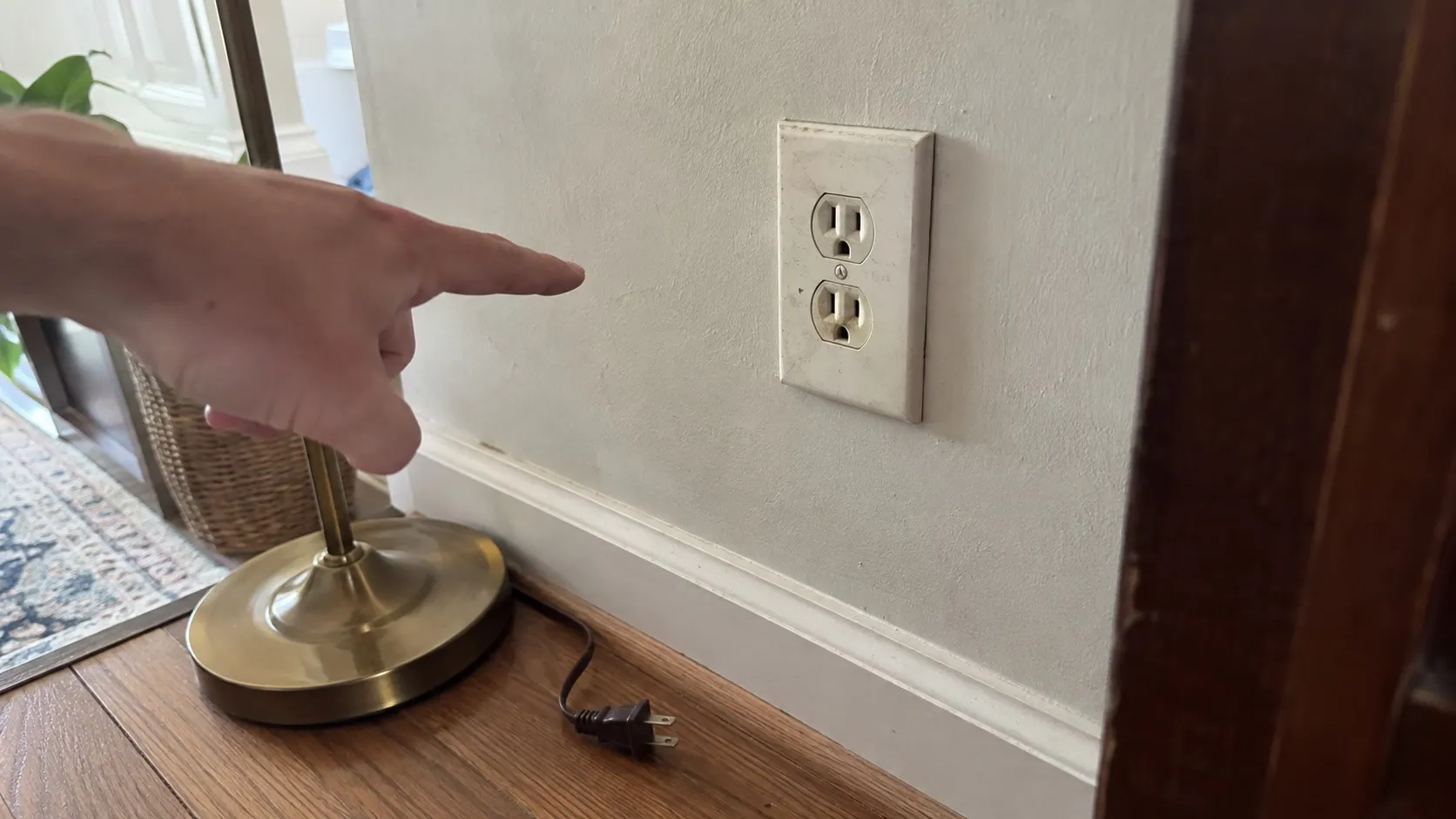
Next, look for a tripped GFCI in a kitchen, bath, garage, laundry area, or exterior location if the affected outlets are in or near those areas. A GFCI can protect outlets in another room. If the device is dry and undamaged, try one reset. Do not keep resetting a device that will not hold. ESFI explains how GFCI reset and test functions should behave and recommends attention when they do not work.
You may also look at the breaker positions and labels without removing the panel cover. If a breaker looks tripped and there are no warning signs, one reset after unplugging affected devices may help clarify the situation. If it trips again, stop. Repeated resets are not a repair. Our breaker-tripping guide addresses that pattern in detail.
Finally, check whether neighbors are affected or whether your utility reports an outage. That is especially useful after a storm. An electrician cannot repair an outage on the utility’s side of the service; the utility cannot repair a faulty branch circuit inside the home.
Why Can Part Of A House Lose Power?
Several different issues can create a partial outage:
- A tripped breaker or GFCI may shut off one circuit or a group of protected outlets.
- A failed outlet, switch, or connection may interrupt power to devices farther along a circuit.
- Water intrusion or storm damage may affect one outdoor or interior circuit.
- A panel or service problem can affect larger areas or create unusual voltage symptoms.
- A utility-side issue can affect the power delivered to the house.
The symptom is a starting point, not a diagnosis. An electrician may need to trace circuits, test voltage safely, and inspect accessible components to distinguish these causes.
When Is It More Than A Single Dead Circuit?
If multiple unrelated rooms or major 240-volt appliances are affected, or lights in one area brighten while others dim, treat the situation as more urgent. Avoid running sensitive appliances and contact the utility and an electrician for guidance. Do not attempt to inspect the meter base, service entrance, or interior panel parts yourself.
If only one outlet has stopped working while the rest of the room is normal, that is a narrower question covered by our dead-outlet guide.
What Information Helps A Troubleshooting Visit?
The Electrical Safety Foundation International identifies repeated breaker problems, flickering or dimming lights, unusual sounds, heat, and shocks as warning signs that warrant professional inspection. For a Wilmington-area home, the goal is to identify whether the problem is one device, one circuit, the panel, or the supply—and then recommend the right repair.